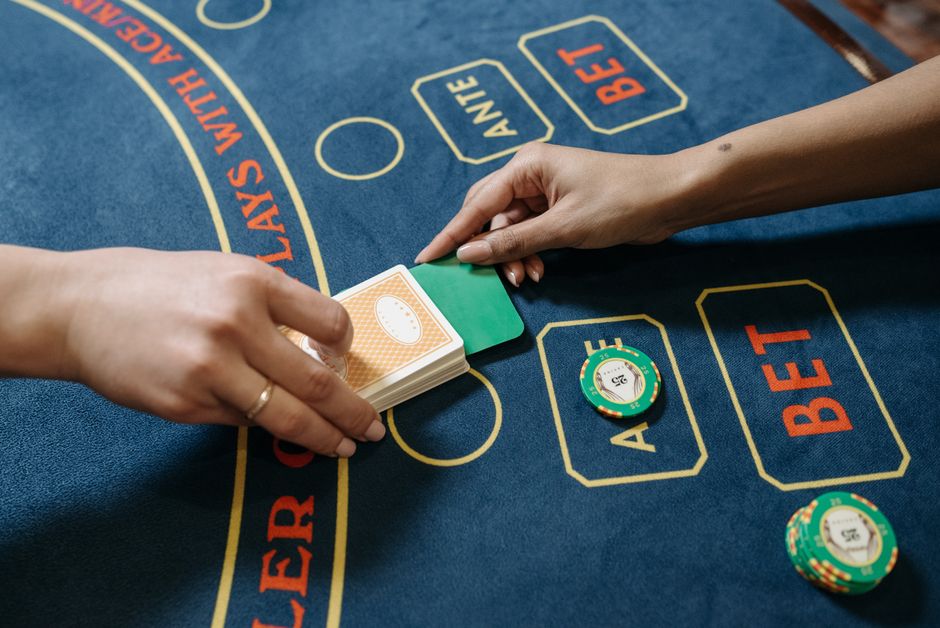

The House Always Wins? Why Smart Players Still Love iGaming

Walk into any casino on the Las Vegas Strip and you'll see the same scene: a mix of hope, math, and adrenaline. Slide over to an online poker table at 2 a.m. on a Tuesday and you'll find something surprisingly similar. The games change, the stakes shift, but the psychology of the player — and the cold arithmetic of the house — stay exactly the same. That tension is the whole story of iGaming, and understanding it is what separates people who enjoy this world from people who get chewed up by it.
The Real Math Behind Slots (And Why It's Not Just Luck)
Slots are the least understood game in the building. Most players assume the outcome is pure randomness with no structure. That's only half true. Every slot machine has an RTP — return to player percentage — typically somewhere between 92% and 97% for modern video slots. A 96% RTP means that over millions of spins, the machine pays back 96 cents for every dollar wagered. The casino keeps the rest. That 4% edge is the entire business model. If you want to dig deeper, สล็อตเว็บตรง is worth a look.
Here's what that actually means in practice. A $1 spin on a 96% RTP slot has an expected loss of about 4 cents. Play 500 spins an hour and your theoretical loss is $20 per hour, even if you win some individual spins along the way. Volatility matters too — high-variance slots like Book of Dead can go hundreds of spins without a meaningful hit, then dump a 2,000x multiplier. Low-variance slots hit small, frequently, and rarely change your session's fate. Neither is 'better.' They suit different bankrolls and temperaments.
- Check the RTP before you play. It's usually buried in the paytable or help menu. Two percent sounds trivial, but over a long session it's significant.
- Match volatility to your bankroll. Low variance for short sessions, high variance only if you can stomach dry spells.
- Ignore 'due' machines. Random number generators have no memory. A slot that hasn't paid in an hour is no more likely to pay now.
Poker: The Only Casino Game Where Skill Actually Compounds
Poker is the outlier. Unlike slots, roulette, or baccarat, the house doesn't play against you — the house just takes a rake. The players compete against each other. This means a genuinely skilled player can win long-term, and a weak player loses to other players, not just to the casino's edge. That's why poker traffic online has stayed resilient for two decades despite regulation changes, bot scandals, and market fragmentation.
But 'skill' in poker is misunderstood. It's not about bluffing every hand or making hero calls. It's about three unglamorous things:
- Position. Acting last gives you information. A mediocre hand in late position is more profitable than a good hand in early position.
- Bankroll management. Cash game pros typically buy in for 100 big blinds and never risk more than 5% of their bankroll on a single table. Online tournament grinders work with 100-200 buy-ins.
- Volume and review. Tracking software, hand history reviews, and consistently putting in tens of thousands of hands is what separates a break-even player from a winner.
If you're playing online poker seriously, choose one variant — no-limit hold'em, pot-limit Omaha, whatever — and go deep. Splitting your study time across five games is the fastest route to being mediocre at all of them.
Sports Betting: Information Is the Edge, Discipline Is Survival
Sports betting is where iGaming gets genuinely interesting for analytically-minded players. Unlike a slot spin, a football match has information attached to it: injuries, weather, travel schedules, referee tendencies, lineup rotations. Efficient markets price most of that in. But not all of it. Closing line value — whether you consistently bet at a better price than the final odds — is the single most reliable signal of long-term profitability among sharp sports bettors.
The trap is the same everywhere: chasing losses. A bettor who stakes 1-2% of their bankroll per pick can survive a 20-bet losing streak. Someone who double-stakes after a loss is essentially playing a slot machine with a person's name on it. The book doesn't care about you, your parlay, or how 'due' your team is.
A few practical habits that actually matter:
- Line shopping. Different books offer different prices on the same game. Over hundreds of bets, taking -105 instead of -110 is a real, measurable edge.
- Avoid parlays as a strategy. They're fun. They're also high-margin for the book. Treat them as entertainment, not investment.
- Track everything. If you can't tell me your win rate by sport and bet type, you're gambling on vibes.
Responsible Play Is Not a Slogan — It's the Whole Game
None of the above is worth reading if you don't control the session. The iGaming industry has spent years promoting 'responsible gambling' as a marketing term, but the substance is real. Deposit limits, session timers, cool-off periods, and self-exclusion tools exist at every licensed operator and they work if you use them before you need them.
A simple framework: set a monthly entertainment budget for gambling, the same way you'd set one for concerts or dinners. When it's gone, it's gone until next month. Never bet money you need for rent, bills, or debt — obviously — but also never bet in a state where a loss will change your mood for days. If it does, that's a signal to step back, not to press harder.
The Bottom Line
iGaming is a vast, sometimes dazzling, sometimes predatory ecosystem. Slots are entertainment with a built-in cost. Poker rewards patience and study. Sports betting rewards information and discipline. All three punish ego. The players who stick around and enjoy it — the ones who don't burn out or blow up — are almost always the ones who understand the math, pick one lane, and treat the whole thing as paid entertainment rather than a get-rich-quick scheme. The house doesn't always win because it cheats. It wins because it plays a long game most players never learn to play.