

The House Always Wins? Why Smart iGaming Players Still Beat the Odds
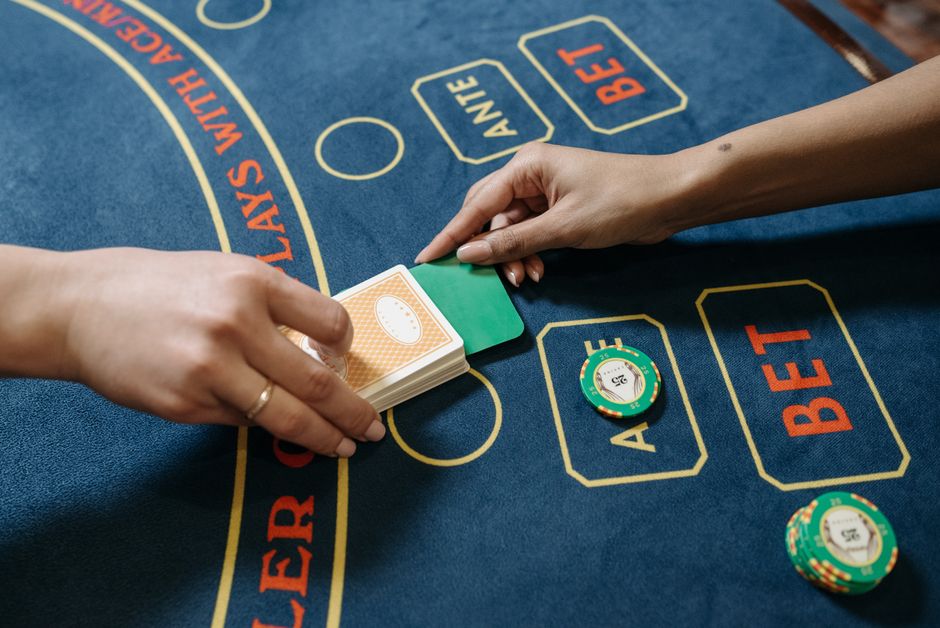
Anyone who has spent more than ten minutes in a casino has heard the old line: the house always wins. It is repeated like gospel, usually by someone who just lost a hand of blackjack. But here is the uncomfortable truth that phrase glosses over — the house always wins on average, across millions of bets, because of a tiny mathematical edge called the house edge. That edge does not guarantee the casino takes your money tonight. It guarantees the casino profits over time. Understanding that distinction is the first step from being a tourist at the tables to playing like someone who actually knows what they are doing.
The House Edge, Explained Without the Marketing Spin
Every game you will ever play in a casino comes with a built-in commission. It is baked into the rules, not hidden in a back room. In American roulette, the wheel has 38 pockets (0, 00, and 1 through 36), but payouts are calculated as if there are only 36. That extra pair of green pockets is the entire business model. The edge on a single-number bet comes out to roughly 5.26 percent. Play European roulette with only one zero, and that edge drops to about 2.7 percent. Same game, same thrill, nearly half the tax.
Now contrast that with blackjack, where basic strategy — a chart of mathematically optimal decisions for every hand combination — can push the house edge below 0.5 percent when playing a favorable rule set like six decks, dealer stands on soft 17. That is not a rounding error. It is the difference between a game where you lose $52 per $1,000 wagered and one where you lose $5. Over a weekend, that gap decides whether you go home even or go home resentful.
The lesson is not that you should only play blackjack. It is that the game you choose matters far more than the bet size you pick.
Slots: Where the Marketing Meets the Math
Slots get a bad reputation in serious gambling circles, and frankly, much of it is deserved. Average land-based slot machines return somewhere between 85 and 92 percent to players over their lifetime. Online slots tend to be more generous, often sitting in the 94 to 97 percent range depending on the provider and jurisdiction. But that return-to-player percentage is calculated over millions of spins. In a single session of 200 spins, variance will do whatever it wants with your bankroll.
What separates a thoughtful slot player from a button-masher comes down to a few concrete habits:
- Check the RTP before you spin. Slot review sites publish this. A 96.5 percent slot is a fundamentally different proposition than an 88 percent one, even if they look identical.
- Understand volatility. Low-volatility slots pay small and often, keeping you in the game longer. High-volatility slots are a lottery ticket — long dry spells punctuated by rare, massive payouts.
- Treat bonus rounds as the main event. In modern video slots, the base game often just funds the bonus. Knowing how a slot triggers free spins and what multipliers apply is more valuable than any 'hot machine' theory.
And please, retire the idea that a machine is 'due' for a jackpot. Random number generators have no memory. The slot does not know you have been losing for an hour, and it does not care.
Poker Is the One Game Where Skill Genuinely Pays
Here is where iGaming splits decisively from pure gambling. In poker, you are not playing the house. You are playing other people, and the house takes a small rake. Every decision your opponent makes — the hands they fold, the bluffs they fire, the tells they leak — is information you can profit from. That is not true at a roulette table. No amount of concentration changes where that ball lands.
But 'skill-based' does not mean 'easy.' The vast majority of poker players are long-term losers, and it is not because they are unlucky. It is because they chase draws without the right pot odds, play too many hands from early position, and confuse aggression with recklessness. If you want to take poker seriously: Those comparing choices often turn to สล็อตเว็บตรง.
- Learn pot odds and expected value until they are reflexive, not things you calculate on a notepad.
- Play tight from early position and loosen up on the button. Position is worth more than almost any hand.
- Track your results over thousands of hands. If you cannot tell whether you are winning after five sessions, you cannot tell whether you are winning.
- Pick your stakes so a bad beat stings but does not alter your life. Tilt is the most expensive emotion in poker.
Bankroll Management: The Boring Skill That Separates Survivors from Casuals
Ask any professional gambler what matters more than game selection, and they will say bankroll management without blinking. It is not glamorous. It does not make for good stories. It is also the single biggest predictor of who is still standing after a year.
The principles are simple enough to fit on a napkin. Never gamble with money you need for rent, food, or bills — that is not a strategy, it is a countdown. Decide in advance what your session bankroll is and stop when it is gone, no exceptions, no 'just one more deposit.' Conversely, set a win target and walk away when you hit it. The player who books a 40 percent session profit is far better off than the one who gives it all back chasing a number they never should have named.
A useful rule of thumb for slots and table games: your session bankroll should be at least 100 times your average bet if you want a realistic shot at surviving variance long enough to enjoy the session. Betting $5 a spin on a $100 bankroll is not gambling — it is a countdown timer with extra steps.
Promotions, Bonuses, and the Fine Print Nobody Reads
Online casinos compete hard for your attention, and bonuses are the battleground. A 100 percent match up to $500 sounds generous until you read the wagering requirement: 40x on the bonus, slots contributing 100 percent, table games contributing 10 percent. Do that math. A $500 bonus with a 40x requirement means $20,000 in wagers before you can withdraw a cent. On a 96 percent RTP slot, the expected loss on that volume is around $800. You are effectively paying for the privilege of playing with 'free' money.
None of that makes bonuses worthless. It means you should read the terms like a contract, because that is exactly what they are. Look for cashback offers with no wagering, reload bonuses that apply to games you actually play, and loyalty programs that reward volume over years rather than one frantic weekend.
The Long Game
The uncomfortable reality of iGaming is that most people who walk through the digital doors — or the physical ones — will lose money. That is not cynicism, it is arithmetic. The question is not whether you can beat the house edge. It is whether you know which games let you minimize it, which format lets you profit from other players' mistakes, and whether you have the discipline to treat your bankroll like a resource instead of a scoreboard. The players who last are rarely the ones who win the biggest single hand. They are the ones who understood the math before they sat down, set limits before they needed them, and walked away while the walking was still easy. The house may always win on average, but the average is made of millions of individual decisions. Yours are the only ones you control.