

Island Place Names Explained: Norse and Gaelic Roots You Can Spot on a Map
Look at any map of the British Isles and the names start to blur together: Kirkwall, Portree, Tobermory, Lerwick, Scalasaig. They look arbitrary until you learn the code. Most island place names are built from a small set of Old Norse and Gaelic building blocks, and once you can recognise a dozen of them, the map turns into a history book. You can trace where Norse farmers settled, where Gaelic-speaking monks and crofters held on, and where the two languages met, argued and merged.
Why island names survive so well
Names are stubborn things. Towns get renamed by committees, streets get renumbered, but a headland that has been called the same thing for a thousand years tends to stay called it. Islands are especially good at preserving this. Communities were small, often isolated, and the names were practical — a description of a bay, a hill, a farm, a landing place — so there was no reason to change them.
That means when you read a name like Rodel in the Outer Hebrides or Scalloway in Shetland, you are often reading something close to what a Norse settler or a Gaelic speaker actually said. The spelling has been flattened by mapmakers and anglicised by clerks, but the bones are still there.
The Norse toolkit: go through the suffixes
Norse settlement left its heaviest mark on Shetland, Orkney, the Outer Hebrides and parts of the west coast. If a name contains one of these elements, you are almost certainly standing on Norse ground.
- -ay or -ey — from ey, meaning island. Orkney, Shetland's Fetlar-era names, Sanday, Rousay, Hoy. If you see an island name ending in -ay, -ey or -a, it is usually simply "island" with a description in front.
- -ster — from setr, a farm or dwelling. Lerwick sits beside Scalloway, but look for -ster in places like Busta and Garth country, and in Orkney names such as Stromness's neighbours. It tells you this was settled farmland, not just a landing site.
- -wick or -vik — from vík, a bay or inlet. Lerwick, Kirkwall's old Norse form, Wick itself on the mainland. A trading or fishing bay.
- -geo — from gjá, a narrow inlet or ravine. Very common in Orkney and Shetland. Look for it on coastal paths.
- -holm — from holmr, a small island or islet. Holm appears all over the Northern Isles.
- -ness — from nes, a headland or promontory. Stromness, Duncansby. If it sticks out into the sea, it is probably a ness.
- -dale — from dalr, a valley. Rodel, Haroldswick's inland neighbours, and countless -dale names in Orkney.
- -garth — from garðr, an enclosure or farmyard. A Norse farmstead, often with good grazing.
Norse prefixes worth knowing
Kirk- comes from the Norse kirkja, a church, which is why Kirkwall and Kirkcudbright both point to early Christian sites. Stor- means big, as in Stornoway (roughly "big bay" or "steering bay", depending on which derivation you follow). Lang- means long. Sand- means sand, and Voe, from vágr, means a bay or inlet, which is why Shetland has so many places called -voe.
Gaelic building blocks: the other half of the map
Move south and west and the language changes. Gaelic names describe the land in a different way — often more visual, more tied to the shape and colour of a place. The best-known element is dun or dùn, a fort, which is why you find Dunvegan and Dunstaffnage. But there are plenty more.
- Beinn or Ben — a mountain. Beinn Mhor, literally "big mountain".
- Loch — a lake or sea inlet. Everywhere.
- Inver- — the mouth of a river. Inveraray, Inverness. If a name starts with Inver-, look for a river mouth.
- Kil- — from cill, a cell or church. Kilbride, Kilmuir. A giveaway of early Christian sites.
- Ach- or Auch- — a field or piece of land. Achmore, "big field".
- -more — big. Achmore, Beinn Mhor, Kilmore.
- -beg — small. The pair is a gift to map readers: Achmore and Achbeg are often neighbours.
- Ard- — a height or promontory. Ardnamurchan, Ardrossan.
- Cnoc or Knock — a small hill. Knock names are common on Islay and Jura.
Combinations: where the two languages collide
The most interesting names are the hybrids. Kirkibost in the Outer Hebrides pairs the Norse kirkja with a Gaelic element. Lochmaddy mixes Gaelic loch with a Norse personal name. On Islay you can walk from a Norse -ay island name into a Gaelic Kil- settlement within a mile. That overlap is not confusion — it is a record of two peoples living side by side, borrowing each other's words for the features that mattered.
How to read a name on the spot: a five-minute method
Next time you are standing at a harbour or a road sign, try this in order.
- Say the name out loud. Anglicised spellings hide vowels; hearing it often reveals the root.
- Strip off the ending first. Is it -ay, -wick, -ness, -dale, -ster? That is usually the Norse layer.
- Then check the beginning. Inver-, Kil-, Ard-, Ach-? That is usually the Gaelic layer.
- Look at the landscape in front of you. Does the meaning fit? A ness should stick out; a voe should be a bay; a dun should sit on a defensible rise.
- Check a decent map or a place-name dictionary for the parish. Local heritage centres and island museums often have the most reliable explanations, and they will tell you when a derivation is disputed.
Watch out for false friends. Not every -ay is an island, and not every Kil- is a church — some names have been worn down by centuries of speech until the original meaning is buried. Treat derivations as likely rather than certain, and enjoy the uncertainty.
A practical closing note for map readers
You do not need to learn Old Norse or Scottish Gaelic to enjoy this. You need three suffixes, three prefixes and a willingness to look at the ground. Start with the names you already know: Stornoway, Kirkwall, Tobermory, Portree. Break them apart deliberately, and see which elements repeat across the map. Within an afternoon you will begin to spot the Norse coast and the Gaelic interior without any help at all.
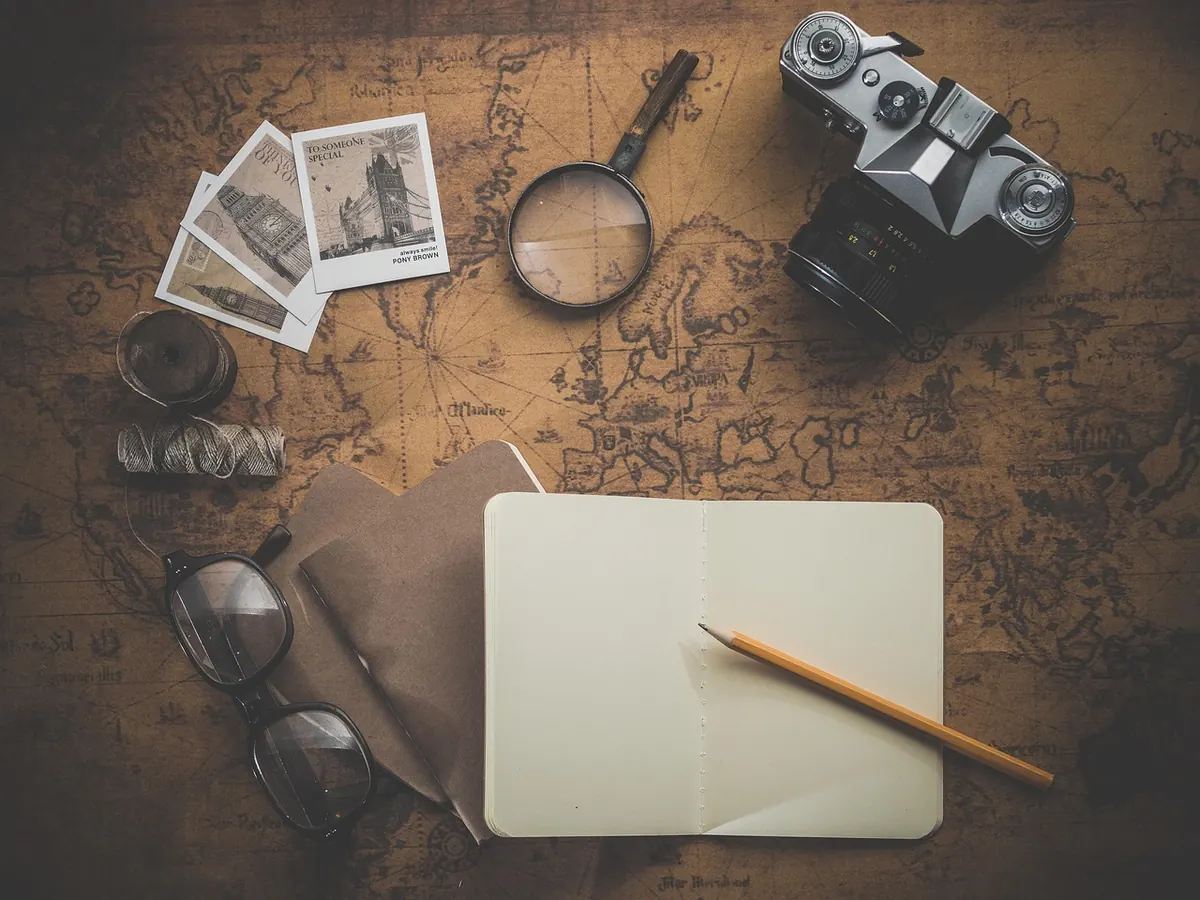
Keep a notebook. Write down the name, the landscape, and your guess. Over a season of island walking, that small habit will teach you more about the history of these shores than most guidebooks manage.
Photo: DariuszSankowski / Pixabay